Showing posts with label Top Cancer Hospital India. Show all posts

Tuesday, 25 July 2023

Advancing Cancer Care: Top Surgical Oncology in India

 Cancer remains one of the most challenging health issues globally, affecting millions of lives each year. Surgical oncology, a specialized field within oncology, plays a crucial role in the comprehensive treatment and management of cancer. In recent years, India has emerged as a leading destination for surgical oncology, offering world-class treatment options, state-of-the-art technology, and a pool of highly skilled surgeons. In this blog, we explore the top surgical oncology centers in India and how they are revolutionizing cancer care.

  1. Expertise of Surgeons

One of the primary reasons for India's prominence in surgical oncology is the expertise of its surgeons. Indian oncologists and surgeons have gained international recognition for their skills, knowledge, and experience in treating various types of cancers. Many of them have received training and qualifications from prestigious institutions around the world, ensuring that they stay abreast of the latest advancements in the field.

  1. Cutting-edge Technology

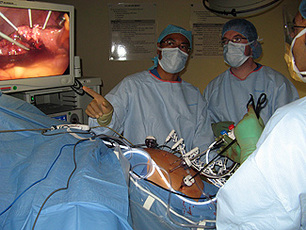
Indian surgical oncology centers are equipped with cutting-edge technology, enabling precise and effective cancer treatments. From advanced robotic surgery systems to high-resolution imaging devices, these centers employ the latest innovations to aid in accurate diagnosis and precise surgical interventions. The integration of technology has significantly improved surgical outcomes and patient recovery rates.

  1. Multidisciplinary Approach

Top surgical oncology centers in India follow a multidisciplinary approach to cancer care. This involves a team of experts from various disciplines, including medical oncology, radiation oncology, pathology, radiology, and more, working together to create personalized treatment plans for each patient. This collaborative approach ensures that patients receive comprehensive and holistic care, enhancing their chances of successful outcomes.

  1. Comprehensive Cancer Treatments

Indian surgical oncology centers offer a wide range of treatments for various cancers. These include minimally invasive procedures, such as laparoscopic and robotic surgeries, which reduce trauma, pain, and recovery time for patients. Additionally, centers provide radical surgeries, reconstructive surgeries, and palliative procedures to address different stages of cancer and the individual needs of patients.

  1. Affordable Treatment Options

Compared to many Western countries, the cost of cancer treatment in India is significantly lower. However, this does not compromise the quality of care or the expertise of the medical professionals. The affordability factor has made India an attractive destination for international patients seeking world-class surgical oncology without breaking the bank.

  1. State-of-the-art Infrastructure

India has witnessed substantial investments in healthcare infrastructure, and many surgical oncology centers boast state-of-the-art facilities and amenities. The hospital environments are designed to be patient-friendly, with a focus on providing comfort and support during treatment and recovery.

  1. Access to Clinical Trials

India is increasingly becoming a hub for clinical trials in oncology. Patients often have access to cutting-edge treatments and experimental therapies through these trials, which may not be available in their home countries. Participation in clinical trials expands the treatment options for patients, particularly those with advanced or hard-to-treat cancers.

Conclusion

The top surgical oncology centers in India have proven their mettle in delivering world-class cancer care. With skilled surgeons, advanced technology, multidisciplinary approaches, and affordable treatment options, India has become a beacon of hope for cancer patients worldwide. Whether it's early-stage cancer or complex cases, these centers offer comprehensive solutions and compassionate care, enhancing the chances of successful treatment and improved quality of life for patients. As the field of surgical oncology continues to evolve, India remains at the forefront, advancing cancer care and driving positive outcomes for those battling this formidable disease.

Wednesday, 21 October 2015

Liver Cancer Treatment at Top Cancer Hospitals in India

General Information About Adult Primary Liver Cancer Key Points
  • Adult primary liver cancer is a disease in which malignant (cancer) cells form in the tissues of the liver.
  • There are two types of adult primary liver cancer.
  • Having hepatitis or cirrhosis can affect the risk of adult primary liver cancer.
  • Signs and symptoms of adult primary liver cancer include a lump or pain on the right side.
  • Tests that examine the liver and the blood are used to detect (find) and diagnose adult primary liver cancer.
  • Certain factors affect prognosis (chance of recovery) and treatment options.

    Adult primary liver cancer is a disease in which malignant (cancer) cells form in the tissues of the liver.
    The liver is one of the largest organs in the body. It has four lobes and fills the upper right side of the abdomen inside the rib cage. Three of the many important functions of the liver are:


    • To filter harmful substances from the blood so they can be passed from the body in stools and urine.
    • To make bile to help digest fat that comes from food.
    • To store glycogen (sugar), which the body uses for energy.
Anatomy of the liver. The liver is in the upper abdomen near the stomach, intestines, gallbladder, and pancreas. The liver has four lobes. Two lobes are on the front and two small lobes (not shown) are on the back of the liver.


There are two types of adult primary liver cancer.


The two types of adult primary liver cancer are:


  • Hepatocellular carcinoma.
  • Cholangiocarcinoma (bile duct cancer)


The most common type of adult primary liver cancer is hepatocellular carcinoma. This type of liver cancer is the third leading cause of cancer-related deaths worldwide.

This summary is about the treatment of primary liver cancer (cancer that begins in the liver). Treatment of cancer that begins in other parts of the body and spreads to the liver is not covered in this summary.

Primary liver cancer can occur in both adults and children. However, treatment for children is different than treatment for adults. 

Having hepatitis or cirrhosis can affect the risk of adult primary liver cancer.
Anything that increases your chance of getting a disease is called a risk factor. Having a risk factor does not mean that you will get cancer; not having risk factors doesn’t mean that you will not get cancer. Talk with your doctor if you think you may be at risk. 


The treatment options are dictated by the stage of Liver Cancer and the overall condition of the patient. The treatment to be given depends mainly on the size, number, and site of tumors in the liver. Before planning the appropriate treatment the functioning of the Liver is checked as also the spread of the cancer within and outside the liver is to be tested. The Various treatment options available are as follows:


Adult primary liver cancer is a disease in which malignant (cancer) cells form in the tissues of the liver.
The liver is one of the largest organs in the body. It has four lobes and fills the upper right side of the abdomen inside the rib cage. Three of the many important functions of the liver are:
Enlarge 

Anatomy of the liver. The liver is in the upper abdomen near the stomach, intestines, gallbladder, and pancreas. The liver has four lobes. Two lobes are on the front and two small lobes (not shown) are on the back of the liver.

There are two types of adult primary liver cancer.
The two types of adult primary liver cancer are:
The most common type of adult primary liver cancer is hepatocellular carcinoma. This type of liver cancer is the third leading cause of cancer-related deaths worldwide.
This summary is about the treatment of primary liver cancer (cancer that begins in the liver). Treatment of cancer that begins in other parts of the body and spreads to the liver is not covered in this summary.

Primary liver cancer can occur in both adults and children. However, treatment for children is different than treatment for adults. (See the PDQ summary on Childhood Liver Cancer Treatment for more information.)

Having hepatitis or cirrhosis can affect the risk of adult primary liver cancer.
Anything that increases your chance of getting a disease is called a risk factor. Having a risk factor does not mean that you will get cancer; not having risk factors doesn’t mean that you will not get cancer. Talk with your doctor if you think you may be at risk.
The following are risk factors for adult primary liver cancer:

Signs and symptoms of adult primary liver cancer include a lump or pain on the right side.

These and other signs and symptoms may be caused by adult primary liver cancer or by other conditions. Check with your doctor if you have any of the following:
Surgery :
 Surgery is the removal of the tumor and surrounding tissue during an operation. It is likely to be the most successful disease-directed treatment, particularly for patients with small tumors (smaller than 5 cm). A surgical oncologist is a doctor who specializes in treating cancer using surgery.

Hepatectomy : When a portion of the liver is removed, the surgery is called a Hepatectomy. A Hepatectomy can be done only if the cancer is in one part of the liver, and the liver is working well. The remaining section of liver takes over the functions of the entire liver and may regrow to its normal size within a few weeks

Liver Transplantation :Liver transplant may be the best option for some people with small liver cancers. At this time, liver transplants are reserved for those with small tumors (either 1 tumor smaller than 5 cm across or 2 to 3 tumors no larger than 3 cm) that have not invaded nearby blood vessels. In most cases, transplant is used for tumors that cannot be totally removed, either because of the location of the tumors or because the liver is too diseased for the patient to withstand removing part of it.

Chemoembolization: This is a type of chemotherapy treatment in which drugs are injected into the hepatic artery and then the flow of blood through the artery is blocked for a short time so the chemotherapy stays in the tumor longer. Blocking the blood supply to the tumor also kills cancer cells

Radiation Therapy : Radiation therapy is the use of high-energy x-rays or other particles to kill cancer cells. A doctor who specializes in giving radiation therapy to treat cancer is called a radiation oncologist. A radiation therapy regimen (schedule) usually consists of a specific number of treatments given over a set period of time. External-beam radiation therapy is radiation given from a machine outside the body. External-beam radiation therapy is not often used for HCC.

Targeted Therapy : Targeted therapy is a treatment that targets the cancer’s specific genes, proteins, or the tissue environment that contributes to cancer growth and survival. This type of treatment blocks the growth and spread of cancer cells while limiting damage to normal cells. Recent studies show that not all tumors have the same targets. To find the most effective treatment, your doctor may run tests to identify the genes, proteins, and other factors in your tumor.

Chemoembolization : Before Insertion of the tiny particles that block the blood flow an anticancer drug is injected into the artery. The drug stays in the liver for longer without blood flow, and thus the impact is more.

Radiofrequency Ablation : For inoperable liver tumors, radiofrequency ablation (RFA) offers a nonsurgical, localized treatment that kills the tumor cells with heat, while sparing the healthy liver tissue. Thus, this treatment is much easier on the patient than systemic therapy.

Cryosurgery : It is a treatment that uses an instrument to freeze and destroy abnormal tissue, such as cancerous cells. This type of treatment is also called Cryotherapy. The doctor may use ultrasound to guide the instrument.

Percutaneous Ethanol Injection : Percutaneous ethanol injection is a cancer treatment in which a small needle is used to inject ethanol (alcohol) directly into a tumor to kill cancer cells. The procedure may be done once or twice a week. Usually local anesthesia is used, but if the patient has many tumors in the liver, general anesthesia may be needed.

Hyperthermia Therapy : Hyperthermia therapy is a type of treatment in which body tissue is exposed to high temperatures to damage and kill cancer cells or to make cancer cells more sensitive to the effects of radiation and certain anticancer drugs. Because some cancer cells are more sensitive to heat than normal cells are, the cancer cells die and the tumor shrinks.

Biologic Therapy : Biologic therapy is a treatment that uses the patient’s immune system to fight cancer. Substances made by the body or made in a laboratory are used to boost, direct, or restore the body’s natural defenses against cancer. This type of cancer treatment is also called biotherapy or immunotherapy.

Send us a Medical Report to Get FREE Medical Opinion from India's Top Doctors MyMedOpinion.com is the hub of Surgeons and specialists for major diseases. We give you a chance to speak to our doctors and discuss your health issues directly. 

Email Us: Free@mymedopinion.com or Call Us: +91-7503537224