Showing posts with label Spine doctors in India. Show all posts

Wednesday, 8 July 2015

Laser therapy for spine Treatment in India - Best Spine Hospital in India


Laser therapy is the use of monochromatic light emission from a low intensity laser diode (250 milliwatts or less) or an array of high intensity super luminous diodes (providing total optical power in the 1000-2000 milliwatt range). Conditions treated include musculoskeletal injuries, chronic and degenerative conditions and wounds. The light source is placed in contact with the skin allowing the photon energy to penetrate tissue, where it interacts with various intracellular biomolecules resulting in the restoration of normal cell morphology and function. This also enhances the body's natural healing processes. The following chart outlines some of the specific effects of Low Intensity Laser Therapy. 

The underlying science behind cold laser therapy is sound. Studies have shown that light of certain wavelengths can reduce pain and inflammation. Lasers can offer very focused beams of light which can be used to target specific areas, which means that in theoretical use, a low intensity laser calibrated to emit light of a specific wavele ngth could potentially be used very effectively to treat areas of inflammation on the body. However, like all medical devices, cold lasers need to be carefully evaluated for safety and efficacy.

Doctors generally recommend cold laser therapy as part of an overall pain management program. For people dealing with chronic pain, cold laser therapy is an option which could be used to reduce the pain, while people with persistent inflammations may also benefit. However, this therapy should not be undertaken without medical supervision, and it is generally not recommended as a replacement for other forms of medical treatment, such as the use of physical therapy to manage chronic pain.
 
Some practitioners of acupuncture have suggested that cold laser therapy could be used much like acupuncture and acupressure, with the beams of the laser targeting specific points on the body. These practitioners of alternative medicine rely on their training and experience to support their beliefs about the use of cold laser therapy. Stimulation of pressure points can be used to treat a number of conditions treatable with acupuncture. 
A number of terms are used to refer to cold laser therapy, including low power laser therapy (LPLT), low level laser therapy (LLLT), biostimulation, soft laser, and laser acupuncture. In all cases, the technique involves exposing the skin to targeted laser beams for set periods of time and at set intervals. The light in the laser is supposed to stimulate damaged cells to promote healing and a reduction in inflammation and pain. The "cold" refers not the temperature of the laser, but to the fact that the laser is of low intensity, rather than high intensity lasers, which can burn the skin. 

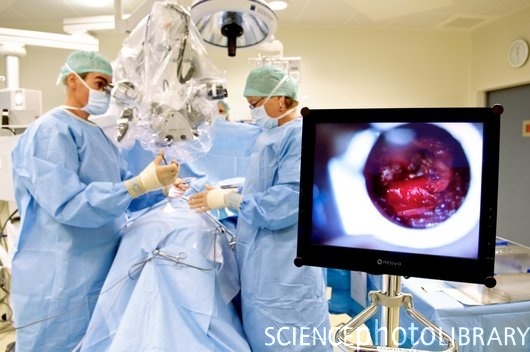
Our network hospitals have the most advanced spine surgery facilities. The spine surgeons here use minimally invasive and computer guided techniques in spine surgery. In a Minimally Invasive spine surgery the surgeon makes a few small incisions unlike the open surgery where a single large incision is made. Minimally Invasive spine surgery has several important benefits for the patients. If you have been advised spine surgery your first choice should be the latest minimally invasive technique developed by our world best hospitals in India. Most advanced Technology like Intra Operative MRI, Brain Suite and Computer Assisted Navigation System are deployed by highly trained surgeons for accurate and safe Spine Surgeries through a small incision.

Why should you choose to get Indian hospitals offer the best spinal surgery treatment in India at affordable prices. MyMedOpinion associated best spine surgery hospitals in India have the latest technology and infrastructure to offer the most advanced spine surgery at low cost.

Salient features of these hospitals are:
  • Comprehensive management of spine disorder from birth defects to degeneration of tumor and trauma.

  • Dedicated team of International trained and vastly experienced Spine Surgeons, Rheumatologists, Neurologist, Physicians and Physiotherapist.

  • Expert evaluation of spinal problems by dedicated team of experienced spine Surgeons, Rheumatologists, Neurologist, Physicians and Physiotherapist.

  • Latest Generation Diagnostic and Imaging facilities including dynamic digital X rays, Spiral CT scanning , MRI and Electrophysiology unit all under one roof.

  • Physiotherapy and Rehabilitation by experts after the surgery help you regain functional abilities quickly helping in vastly improved overall results.

Monday, 29 June 2015

Percutaneous Endoscopic Lumbar Discectomy (PELD) - Minimal Invasive Spine Surgery in india


Percutaneous Endoscopic Lumbar Discectomy (PELD)

PELD or Percutaneous Endoscopic Lumbar Discectomy is an advanced minimally invasive spine surgery done for the decompression of the lumbar disc space and removal of nucleus pulposus via a posterolateral approach. PELD is also a good treatment option in management of spinal tumors and structural deformities also in patients whose pain threshold is low or who are not responding well to conservative treatments like pain killers, anti inflammatory drugs and rehabilitation.

Percutaneous Endoscopic Lumbar Discectomy (PELD) is not the Conventional excision but a treatment which in between the conservative and open surgery. Therefore, it does not disrupt the normal soft tissue or the vertebral structures. After inserting a thin wire into the skin, the surgeons treat the herniated disc with laser and radio-frequency thermal effect under endoscopic guidance.


What is Percutaneous Endoscopic Lumbar Discectomy (PELD)?
Percutaneous Endoscopic Lumbar Discectomy (PELD) is a unique approach for the treatment of non-sequestrated disc herniation (disc prolapse). An advanced minimal invasive technique, PELD is performed for the decompression of the lumbar disc space and removal of nucleus pulposus via a posterolateral approach. In addition to decompression surgery, the technique has been found effective in management of spinal tumors and structural deformities.

What does the procedure involve? 

Percutaneous Endoscopic Lumbar Discectomy is a minimal invasive spine surgery. It is an endoscopic surgical procedure which is conducted under local anaesthesia with mild sedation. The patient is made to lie on his/her front and the exact entry point is mapped on patient’s body using image intensifier X-ray system. A small incision of about 8-10 cm is made from the midline on the posterior part of the body.
 
There are two different ways in which the inter-vertebral disc material can be removed:
  • Manual procedure also known as Automated Percutaneous Discectomy involves insertion of a long spinal needle from the side of the back, directly into the disc, by-passing other bone and ligaments. Through this needle, guide wire is passed and after making a 5 mm incision, a dilator and working cannula are passed, through which an endoscope is inserted. The prolapsed part of disc is removed with the guidance of the camera and monitor attached to the endoscope.
  • The laser surgery, referred to as Percutaneous Laser Discectomy (PLD), uses an external imager called the fluoroscope to direct the probe. The probe delivers laser energy which vaporizes a part of the inter-vertebral disc material and decompresses the nerve root. The most frequently used laser for treatment is Holmium Yttrium-Aluminum-Garnet (YAG) laser.


In either procedure, the wound is closed with single stitch. The patient gets immediate pain relief.

Duration: 60 minutes
Risks
  • Improper placement may result in nerve damage
  • Inadequate decompression may result in the need for a second operation, using a different technique
Benefits
  • Surgery is done under local anaesthesia
  • No muscle, ligament or normal tissue damage and minimal blood loss
  • No prolonged bed rest required after surgery
  • Early return to work
  • Even prolapsed, migrated, extra-foraminal, recurrent discs can be removed
  • Very good technique for old and medically compromised patients

Monday, 4 May 2015

Symptoms and Treatment of Spinal Tumor in India

Spine Tumor Removal Surgery in India

What is Spinal tumor?
A spinal tumor is a development of unwanted cells in or around the spinal cord. These tumors can be benign i.e. non-cancerous or they may be malignant i.e. cancerous. Spinal tumors can occur inside the cord or in the membranes (meninges) covering the spinal cord or between the meninges and bones of the spine. It may also extend to the blood vessels, bones of the spine, nerve roots or spinal cord cells. The presence of spinal tumours can be determined with the help of a biopsy or through a MRI or CT scan. Following are different types of Spinal tumours based on there cancerous or non-cancerous behavior.
What are the Symptoms of Spinal Tumor?
Tumor may cause generalized symptoms in the body (like persistent low energy levels, unexplainable weight loss, lump formation, enlargement of lymph nodes, malaise, irregularities of menstruation in females etc) as well as symptoms pertaining to the affected organ in the body. In case of spinal tumor the patient may present with any of the following:
Objective of Spinal Tumor Surgery
The primary objective of the surgery is to reduce the pain caused by the spinal tumor, to restore and preserve neurological function and provide spinal stability. Spinal Tumor surgery is generally indicated in case there is a localized tumor which can be removed with minimum damage to nerve and spinal cord, or there is persistent neurological deficit and pain which is unresponsive to non operative treatment, or there is vertebral bone destruction affecting spinal stability. Surgery may include resection (partial removal) or excision (complete removal) of tumor. When the tumor is removed (partially or completely) pain and neurologic problems may clear up.
Spinal Tumor Removal Surgery
Advanced medical technology has enabled surgeons to remove spinal tumors that were previously inaccessible due to potential damage and death caused by spinal surgery. Today, neurosurgeons are able to use laser-assisted and high-powered microscopes in a field called microsurgery.
Using such technology, doctors are now able to distinguish between healthy and unhealthy tissue as well as to view microscopic blood vessels and nerves within the operating field. Throughout the spinal surgery procedure, doctors can test the function of nerves using electrodes that helps to prevent nerve damage. Advancements in spinal surgery technologies also employ the use of sound waves that effectively disintegrate tumors. Special suctioning tools remove the fragments.
Surgery : This is often the first step in treating tumors that can be removed with an acceptable risk of nerve damage.
Newer techniques and instruments allow neurosurgeons to reach tumors that were once inaccessible. The high-powered microscopes used in microsurgery make it easier to distinguish tumors from healthy tissue. Doctors also can test different nerves during surgery with electrodes, thus minimizing nerve damage. In some instances, they may use sound waves to break up tumors and remove the remaining fragments.
Even with advances in treatment, not all tumors can be removed completely. Surgical removal is the best option for many intramedullary and intradural-extramedullary tumors, yet large ependymomas at the end of the spine may be impossible to extricate from the many nerves in this area. Although noncancerous tumors in the vertebrae can usually be completely removed, metastatic tumors are less likely to be operable. When a tumor has spread to the spine, radiation alone is usually the treatment of choice. However, research has found that surgery combined with radiation may be more effective at preventing loss of nerve function in people who are healthy enough to tolerate an operation and who have tumors that have spread from an unknown location, have some evidence of nerve injury, have tumors resistant to radiation or have recurrent tumors that were previously irradiated.
Recovery from spinal surgery may take weeks or months, depending on the procedure, and you may experience a temporary loss of sensation or other complications, including bleeding and damage to nerve tissue.
Recovery post Spinal Tumor Surgery
Recovery post Spinal Tumor surgery depends on patient’s health before surgery. The patient’s care is monitored by periodical office visits and re-evaluation by the treating physician. This is important because some tumors, benign or malignant, may reoccur. Usually when the treatment period has ended, the symptoms clear up. Analgesics are given to control post-operative pain and cancer pain. Cancer pain may be difficult to control (e.g. ‘break through pain’). A pain management specialist may provide assistance if conventional drugs (e.g. pill, skin patch) do not provide relief. Any surgery, radiation treatment or chemotherapy can drain the patient nutritionally. Therefore, a proper diet is important to regain strength, lost weight, and a measure of health. A professional nutritionist can provide guidance. Depending on the extent of the surgery and the patient’s medical status, a course of physical therapy may be prescribed. Through exercise and modalities the patient can build strength, endurance and flexibility. 


About MyMedOpinion.com
 
MyMedOpinion.com  affiliated   Best hospitals in India provide an medical opinion from experienced surgeons and the treatment cost includes companion stay  , surgeon fee, medicines and consumables, nursing care, patient's food and airport pick up & drop etc. etc. We offer free, no obligation assistance to international patients to find world class medical treatment in India. We offer support and services to facilitate the care you require. We can help you find the best hospital in India

Send us a Medical Report to Get FREE Medical Opinion from India's Top Doctors

MyMedOpinion.com  is the hub of Surgeons and specialists for major diseases. We give you a chance to speak to our doctors and discuss your health issues directly.
Email Us: Free@mymedopinion.com  Call Us: +91-7503537224

Thursday, 30 April 2015

Minimally Invasive Percutaneous Disc Nucleoplasty Surgery in India

Percutaneous Disc Nucleoplasty is minimally invasive surgery to reduce the volume of a bulging or herniated disc. In both cases the spinal disc puts pressure on a nerve root or the spinal cord and causes back pain or sciatic pain.
Spinal Disc Protrusions do not require open spine surgery
Many patients with back pain show no clear indication of a herniated disc. However with MRI investigation protrusion of the intervertebral discs can be diagnosed. This protrusion can put pressure on nerves or the spinal cord and can cause persistent, or stress-related chronic back pain. Normally this kind of back pain (lumbar or cervical), responds well to conservative treatment options.
When will your neurosurgeon consider Nucleoplasty?
If after six weeks, conservative treatment has not been successful, your spine specialist should consider an intradiscal procedure: The disc protrusion can be reduced by treating the liquid core of the spine simply by using an injection needle. This needle (cannula) allows a radiofrequency instrument to enter the core of the disc, thereby avoiding all the surgical risks associated with open back surgery. This is essentially the principle of the Nucleoplasty.
Nucleoplasty, as a minimally invasive treatment, covers only smaller disc herniations or disc bulges that have not yet broken through the solid fibre ring of the disc and are therefore are not accessible via an open surgical procedure (surgical removal of the disc material).
Endoscopic Nucleoplasty is safe for patients and is a minimally invasive procedure, which produces very good outcomes, without the risks and postsurgical complications associated with open back surgery.
Disc Nucleoplasty is performed on an outpatient basis, with minimal anesthesia requirements. Fluoroscopic guidance is employed as an introducer needle is placed at the nucleus/annulus junction. A SpineWand is introduced through the passage way, and advanced into the disc nucleus. Using Coblation, tissue is then removed by either creating channels (lumbar spine) or spheres (cervical spine). After sufficient tissue is removed, a bandage is placed on the skin and the patient is discharged home. Patients are then usually placed on a routine rehabilitation program.

Nucleoplasty is recommended for patients who have not responded to rest, medical intervention (including steroid injection), and/or physical therapy.

There are many people across the world who suffers from slipped disc problem. In 90 per cent of these cases, the disc prolapsed is contained or limited to the disc space and are not suitable for the traditional discectomy surgery involving the complete removal of the diseased disc. The open surgery is an overkill leading to unsatisfied results, more complications and costly procedure.

In such clinical circumstances, percutaneous treatment also known as disc nucleoplasty has emerged as the best alternative. Moreover the cost of Disc Nucleoplasty at Medworldindia affiliated hospitals in India is minimal. Conventionally the disc prolapse is treated with bed rest and analgesics but with limited relief.

Many successful Nucleoplasty procedures have been performed in India. This minimally invasive approach to treating contained disc herniations has helped most of the International patients return to active and productive lives with effective cost savings. 

Expert Neuro and Spine Surgeons in India who have ample experience in performing this procedure said that, “Spinal Surgery is fast becoming a major sub-speciality in neurosurgery”. Disc nucleoplasty is an innovative percutaneous method of healing disc disease. Disc prolapse can occur in lumbar as well cervical region causing low back pain, radiating pain and neck pain respectively. Related symptoms are excruciating pain, numbness, tingling sensation in hands and legs, burning and weakness of the limbs. The patient will have restricted movement, walking, bending and doing normal day to day activities becomes very difficult. The severe pain results in incapacitation leading to loss of man hours.

Sunday, 12 April 2015

How to find the Best Scoliosis Surgery Hospital in India?

Scoliosis ?

Functional Scoliosis
In this type of scoliosis, the spine is normal, but an abnormal curve develops because of a problem somewhere else in the body. This could be caused by one leg being shorter than the other or by muscle spasms in the back.
Neuromuscular Scoliosis
In this type of scoliosis, there is a problem when the bones of the spine are formed. Either the bones of the spine fail to form completely or they fail to separate from each other during fetal development. This type of scoliosis develops in people with other disorders, including, birth defects and muscular dystrophy and cerebral palsy, or Marfan's disease. People with these conditions often develop a long C-shaped curve and have weak muscles that are unable to hold them up straight. If the curve is present at birth, it is called congenital. This type of scoliosis is often much more severe and needs more aggressive treatment than other forms of scoliosis.
Degenrative Scoliosis
Unlike the other forms of scoliosis that are found in children and teens, degenerative scoliosis occurs in older adults. It is caused by changes in the spine due to arthritis known as spondylosis. Weakening of the normal ligaments and other soft tissues of the spine combined with abnormal bone spurs can lead to an abnormal curvature of the spine. The spine can also be affected by osteoporosis, vertebral compression fractures, and disc degeneration
Expected Results
Scoliosis surgery in India which involves spinal fusion is quite successful in stopping the curve from growing. With sophisticated techniques, doctors can straighten the curve to a great extent which improves the patient's appearance and functioning to a great extent.
Recovery
You would have a lot of pain after the surgery which would be controlled with pain medications. You would stay at the hospital for about a week to ten days to make sure you are on the right healing path. The surgeon would advise you to start walking on second or third day of the surgery and physical therapy would begin on the third or fourth day of the surgery.
Most people return to school and work in 3-4 weeks. Full recovery can take from 4-6 months and most people can resume other activities and even sports after an advice from the surgeon.
Owing to availability of state of the art hospitals, a lot many patients come to India for scoliosis surgery. Scoliosis surgery in India is being performed by highly experienced orthopedic surgeons and doctors. Besides quality of treatment, the cost of the surgery in India is much less than the cost of the surgery in USA, UK or Canada.


About My Med Opinion

MyMedOpinion.com provides the link or bridge to the patient from their home country and  destination country.      They take care of logistics and, in many ways, peace of mind. We provide step by step guidance to international patients traveling to India so that they can avail quality and affordable healthcare services at world-class hospitals without any waiting time. We walk with you every step of the way, as we deliver the very best available Medical care, meeting the highest international standards.

Send us a Medical Report to Get FREE Medical Opinion from India's Top Doctors
MyMedOpinion.com  is the hub of Surgeons and specialists for major diseases. We give you a chance to speak to our doctors and discuss your health issues directly.
Email Us: Free@mymedopinion.com  Call Us: +91-7503537224